


Hello you!
Ok… So… This is not, on the face of it, the most exciting subject.
Sole trader. Limited company. Tax. National Insurance. Companies House. HMRC. I can already feel some of you reaching for another tab.
And before you start reading on, disclaimer: this is UK based information.

If you’re contracting, freelancing, starting a business, or thinking about moving from one structure to another, this stuff matters.
And, frankly, I wish someone had explained it to me in normal human language rather than making me feel like I needed a degree in accountancy just to understand how I was supposed to pay myself.
So, with the help of my current preferred AI tool - ChatGPT… (Soz Claude). I’ve taken a rather dry subject, interrogated the details, checked the current rules against GOV.UK, and attempted to make it something you might actually want to read.
You’re welcome. 💅
Let’s get into it.
First things first: what’s the actual difference?
At its simplest:
Sole trader: you and the business are legally the same thing.
Limited company: the company is a separate legal entity from you.
That one distinction creates most of the differences that follow.
As a sole trader, you are personally responsible for the debts and liabilities of the business. With a limited company, the company is legally separate and limited liability can provide protection for your personal assets, although there are exceptions and guarantees can still create personal liability.
So which one is better?
Annoyingly, there is no universal answer.
It depends on what you’re doing, what you earn, what you want to do next and how much admin you are prepared to tolerate.
Sole trader: the simple option
Being a sole trader is generally the simpler route.
You run the business yourself, you keep the profits after tax and you report your business income through Self Assessment.
If your self-employed income is more than £1,000 in a tax year, you generally need to register for Self Assessment as a sole trader. There are also other circumstances where registration is required or useful.
You are responsible for keeping records of your income and expenses and working out what tax and National Insurance you owe.
For the 2026/27 tax year, self-employed people pay Class 4 National Insurance at 6% on profits between £12,570 and £50,270, and 2% on profits above £50,270. Class 2 contributions are no longer compulsory in the old sense, although voluntary payments may still be relevant in some circumstances.
There is also VAT to think about.
If your taxable turnover goes over £90,000 in a rolling 12-month period, you generally need to register for VAT. You can also choose to register voluntarily below that threshold.
The appeal of being a sole trader is pretty obvious: Less administration. Fewer formalities. And if you’re just starting out, testing an idea or contracting on your own, it can be a perfectly sensible place to start.
The downside?
You are the business.
If the business owes money, that can ultimately become your personal problem.
Limited company: welcome to the paperwork
A limited company is a separate legal entity.
You can be the sole shareholder, the sole director, or both.
The company owns its money. The company makes its profits. And when you want to take money out of the company, there are rules about how you do it.
This is where things get a little more complicated.
A limited company generally pays Corporation Tax on its taxable profits. For 2026, the small profits rate is 19% for profits up to £50,000, while the main rate is 25% for profits over £250,000, with Marginal Relief applying between those thresholds.
And then there is you.
If you take money from the company as salary, that is treated differently from taking money as dividends. Dividends are distributions from the company’s profits and have their own tax rules.
This is one of those areas where “limited companies are more tax efficient” is a dangerously simplistic sentence.
Sometimes they can be.
Sometimes they aren’t.
It depends on the numbers.
And this is exactly where I would stop taking advice from LinkedIn comments and speak to an accountant.
So why do people go limited?
There are a few common reasons.
You might want the separation between your personal finances and the business.
You might be working with larger organisations where a limited company is their preferred supplier structure.
You might be planning to grow the business.
You might want to bring in shareholders or investment.
Or you might simply prefer having a clear distinction between “me” and “my business”.
A limited company can also make sense if you are building something that you want to eventually sell, grow or bring other people into.
But please don’t set one up because you think putting “Ltd” after your name magically makes you more professional.
It doesn’t.
Your work does that.
And then there is the admin...
This is where sole trader and limited company start to feel very different.
As a sole trader, your main tax responsibility is your personal Self Assessment.
With a limited company, there are company accounts, Corporation Tax, Companies House filings, confirmation statements, company records and potentially payroll, VAT and dividend paperwork to think about.
A private limited company normally has to file annual accounts with Companies House and a Company Tax Return with HMRC. The standard deadline for filing annual accounts is nine months after the company’s financial year end, while Corporation Tax is generally due nine months and one day after the end of the accounting period.
You also have to file a confirmation statement at least once every 12 months, even if nothing has changed. The current online filing fee is £50.
And yes, Companies House now charges £100 to register a company online.
Not £12.
That figure has been hanging around the internet for a while and is now very much out of date. The fee changed on 1st February 2026.
So, if you’re reading an old blog post telling you it costs £12 to set up your company...
Close the tab.
What about choosing a business name?
As a sole trader, you can trade under your own name or use a business name, subject to the relevant rules.
One correction from my original research here: you do not simply register your sole trader trading name with HMRC.
There are rules around what you can call your business, and you need to make sure you’re not infringing someone else’s trade mark or using restricted or misleading terms.
Again, this is one of those things where Google can give you 14 different answers before you’ve even had your first coffee.
What does an accountant actually do?
This is where I have a little story.
I had an accountant.
Then I changed accountants. Because they made a mistake and I ended up having to cop a hefty bill.
And the reason I’m mentioning this is because when I told some of my business-owner friends about my particular saga, I realised just how common this stuff is.
One friend had to pay £20,000 to HMRC following an issue involving herself and her accountant.
Another had a surprisingly large tax bill because of a calculation error.
And then there is the slightly different category of:
“I made the money, forgot I had to pay tax on it, and now HMRC would quite like some of it back.”
That last one is nobody else’s fault.
Which is precisely why I started using a spreadsheet.
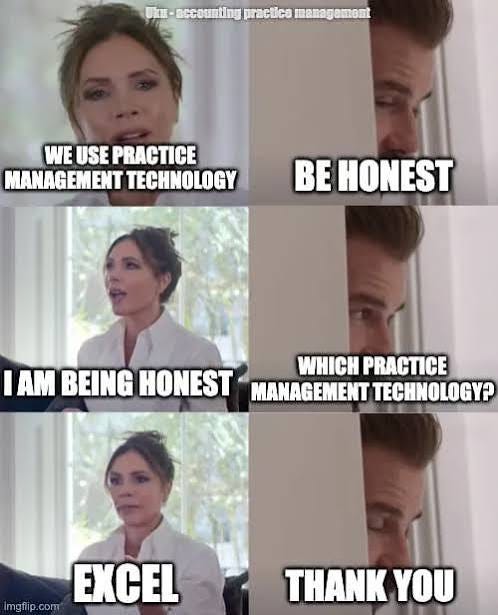
An accountant can be incredibly useful, but “I have an accountant” doesn’t mean you can completely switch your brain off.
For a sole trader, an accountant might help with your Self Assessment, allowable expenses, bookkeeping and tax planning.
For a limited company, they might prepare company accounts, deal with Corporation Tax, manage payroll, advise on dividends, support VAT returns and help you understand what you can and can’t take from the company.
But here’s my slightly controversial take:
Your accountant is not your business owner. You are.
You still need to understand enough about your own numbers to know what’s happening.
Not everything.
You don’t need to become an accountant.
But enough to ask sensible questions.
Enough to spot when something doesn’t make sense.
And enough to know roughly how much money is actually yours.
So... which one should you choose?
If you’re starting out, contracting on your own and want to keep things simple, being a sole trader can make complete sense.
If you’re building something bigger, want a separate legal entity, are thinking about growth or investment, or your clients expect you to operate through a company, a limited company might be worth considering. You also need have a limited company for any OUTSIDE of IR35 contracts.
And you don’t have to make the decision based on vibes.
You can actually run the numbers.
That’s the bit I think gets missed.
People often ask:
“Which is better?”
I’d ask:
“Better for what?”
Better for simplicity?
Better for protecting personal assets?
Better for your current level of profit?
Better for the business you want to build in three years?
Better for the clients you want to work with?
Those are very different questions.
And finally, please don’t panic
If you are sitting there thinking:
“Jesus. I just wanted to start freelancing.”
I hear you.
The good news is that you don’t need to know everything on day one.
You need to understand the basics, keep good records, put money aside for tax, ask questions when you don’t understand something and get proper advice when the decision has financial consequences.
And, ideally, find an accountant you actually trust.
Interview them.
Ask questions.
Don’t just choose the person your mate recommended because they were “really nice”.
Mine was recommended too. Hence this entire section.
And if this has made the difference between “I have absolutely no idea what I’m doing” and “OK, I actually understand the basic choices now”, then we’ve done our job.
Because that’s really the point.
You don’t need to become an expert in tax. You just need enough information to make a better decision about your own business. And maybe, just maybe, we have made one of the dullest subjects in business slightly more interesting along the way.
I’d call that a win. Right?
See you next week,
Lucy xo
P.S. This article was written by ChatGPT this week. I copied and pasted my notes, ran a conversation back and forth then finally landed on this. On subjects that I deem as ‘the important ones’, where I do NOT want to be telling y’all the wrong things, especially when it comes to you and your MONEY - I will use tools like Chat, Gem, Perplexity, and Claude to double check my facts and figures. I will always tell you when I have used them. Just like how I am doing right here, right now.
Hear from one our members on her planned journey into contracting:
(She asked to be anonymous).
After shifting between roles over the last decade, I am finally planning my move into contracting.
I have realized that permanent corporate dynamics simply do not fit how I operate best. I keep a clear line between my work and my personal life, and I am not looking to build my social circle at the office. Being a contractor creates a natural, healthy boundary. Everyone knows the arrangement is temporary, which lets me focus purely on the work without getting pulled into long-term office dynamics.
As a BA, we are often handed requirements that do not make much sense for the bigger picture. I will always advocate for the right path, challenge weak logic, and push back where it counts. But at the end of the day, my job is to deliver what is asked for. The beauty of contracting is that once the handoff is complete, you move on to the next challenge rather than staying behind to clean up the long-term tech debt.
The traditional path of waiting around for an annual two percent raise or hoping for someone to retire never appealed to me. By changing roles four times in five years, I raised my income by 25k and stepped up three levels. I know the value I bring to a project, and I prefer to set my rate accordingly.
I also value outcome over presenteeism. I do not care for office politics or performing for management just to look busy. Sometimes the most productive part of my day is just sitting quietly and processing a complex problem. Contracting measures you on what you actually deliver, not on keeping a seat warm or sitting in traffic to be seen in an office.
Notice periods are another big factor. Being locked into a three-month notice period when a project is clearly not working feels restrictive. Short-term contracts mean if an environment is inefficient or toxic, you have a clear exit strategy. It comes with financial risk, but it is a trade-off I am more than willing to make.
What held me back from pulling the trigger earlier was timing. Just as I built up the momentum to launch my brand, I found out I was pregnant. Delivering quality output matters to me, and I did not want to start out with new clients knowing I would need to step away mid-project.
So for now, the strategy is simple. I am staying put with a company that is being brilliant and supportive through this pregnancy. I am keeping close to this network, looking after myself, and building my foundation. Once my body has recovered and I am through the new mum phase, I will be stepping out on my own.